July 26, 2026 · 4 min read
First AI humanoid is here – the MVP is You!
What if the first useful humanoid isn't a machine becoming more like us, but us becoming more integrated with machines?
I have been using Claude, ChatGPT, and other AI tools just like any other nerd: regularly and enthusiastically.
So much so that I now get annoyed when I cannot reach one quickly. A strange thought emerges in my brain, and I immediately want to pressure-test it. Is it brilliant? Ridiculous? Both? I need my AI sparring partner to help me find out.
That got me thinking: How far are we from having AI function as a second brain — one that is always available, intimately connected to us, and responds with almost no lag?
The more I thought about it, the more convinced I became: We are not that far away. In fact, the first version may already be here.
You are already augmented
When we hear the word "humanoid," we usually picture a robot with two arms, two legs, and an awkwardly human walk. But what if we have the idea backward? What if the first useful humanoid is not a machine becoming more like a human, but a human becoming increasingly integrated with machines?
You and I are already part of that experiment.
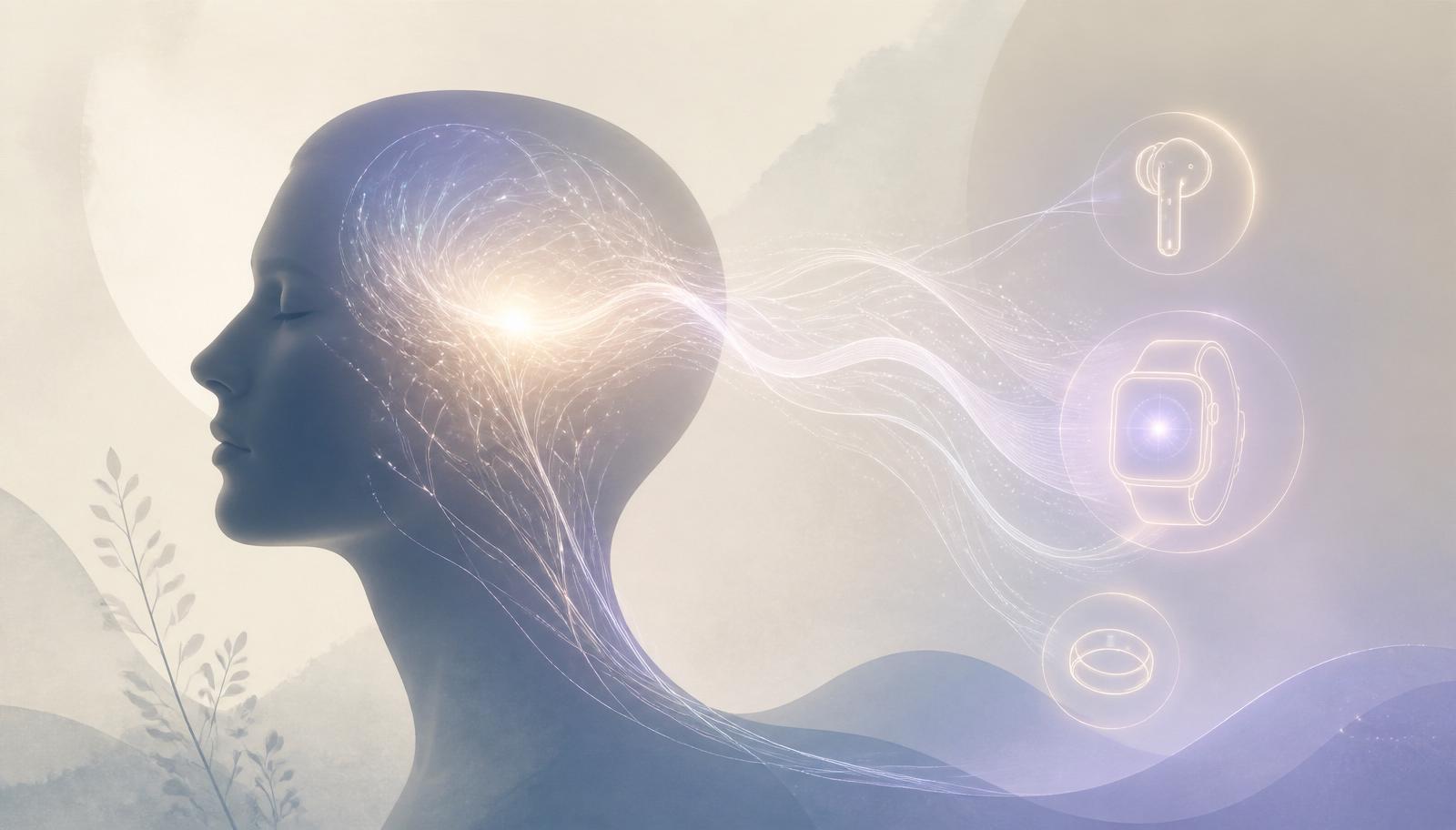
No, most of us do not have machines implanted inside our bodies. But look closely. You may have AirPods in your ears, an Apple Watch on your wrist, or an Oura Ring or WHOOP band constantly monitoring your body.
These devices measure our heart rate, temperature, sleep, movement, and recovery. They tap our wrists when someone wants our attention. We speak into the apparent void and ask our earbuds to answer a call, play a song, send a message, or tell us the latest score — all without looking at a screen.
The technology does not need to be under our skin to become part of how we operate. We already outsource pieces of our memory, navigation, communication, health monitoring, and increasingly, our thinking.
From a product manager's perspective, if the fully integrated human–machine "humanoid" is the final product, then you and I are the MVP.
We are the early release being tested in the real world.
The interface keeps disappearing
Today, accessing AI still involves friction. We pull out a phone, open an app, type or dictate a question, and wait for an answer.
But each new interface removes a little of that friction.
Computers once occupied entire rooms. Then they moved onto desks, into our laps, into our pockets, onto our wrists, and into our ears. It is not difficult to imagine the interface moving even closer.
Perhaps one day, instead of closing your eyes and seeing darkness and strange orange patterns, you will be able to see useful information. A brain–computer interface might communicate with a nearby device at extremely high speed. That device could understand your context, anticipate what you may need, and run a capable AI assistant personalized to you.
You think of a question, and the answer appears.
You struggle to remember a name, and it is retrieved.
You enter a conversation, and relevant context is already available.
Some version of this may sound far-fetched today. But the history of computing is largely the history of powerful technology becoming smaller, faster, cheaper, and more personal.
We are not waiting for the first version of human–AI integration. We are already using it. The next few decades may simply make the interface less visible — and the line between the user and the product harder to locate.
Who gets the upgrades?
That possibility is exciting. It also makes me uncomfortable.
The biggest question may not be whether humans will be upgraded. We already are.
The real question is: Who gets access to the upgrades?
Today, people with more money can buy better devices, faster connectivity, premium AI models, personalized healthcare, and tools that improve productivity. Those advantages may seem incremental now, but what happens when technology can meaningfully enhance memory, attention, learning, decision-making, or physical health?
The next human "updates" could be expensive, proprietary, and closely guarded.
Those with access may learn faster, work more effectively, make better-informed decisions, and monitor health problems before they become serious. Meanwhile, people who are already struggling to keep up with technological change could fall behind even faster.
This is where the socialist in me gets uneasy.
If human enhancement becomes another subscription product, what happens to equality of opportunity? Which capabilities should be premium features — and which should be treated as rights?
We spend a lot of time debating whether AI will replace humans. Perhaps we should spend more time asking what happens when AI becomes part of humans — and only some people receive the best version.
We are the MVP
Human–AI integration probably will not arrive in one dramatic moment. There may be no single day when humanity collectively announces, "We are cyborgs now."
It will happen gradually. One wearable, assistant, sensor, and disappearing interface at a time.
That makes us the MVP — not because we are a finished version of the future, but because we are the version working out its earliest possibilities, failures, habits, and consequences.
So, hello, fellow humanoid!
Leave a comment
Be the first to comment.